

Municipal property valuations play a crucial role in determining property rates and taxes in South Africa. As a property owner, understanding how these valuations are calculated and how they impact your financial obligations is essential.
If you suspect that your property has been overvalued, disputing the municipal valuation can help you avoid unnecessary costs. This guide will provide a step-by-step process for checking and disputing municipal valuations, covering key municipalities like Ekurhuleni and Tshwane.
1. What Are Municipal Valuations Used For?
Municipal property valuations serve several important functions, including:
- Determining Municipal Rates and Taxes: Property valuations influence the amount of rates and taxes you pay to your municipality.
- Funding Service Delivery: The revenue generated from property rates contributes to essential municipal services such as road maintenance, waste collection, and public infrastructure.
- Property Sales and Transfers: Accurate municipal valuations help buyers and sellers determine fair property prices and facilitate smooth transactions.
2. When Are Municipal Valuations Rolled Out?
Municipalities update valuation rolls periodically, usually every 4-5 years. Property owners should be aware of these valuation cycles to review and challenge any discrepancies promptly. As per the Municipal Property Rates Act (MPRA), notice to property owners is to be sent to inform the owner. This however is not always the case.
- Key Dates for Major Municipalities:
- Ekurhuleni: Valuation roll updates occur every 4 years, with public notice given before implementation.
- Tshwane: The city updates its valuation roll at similar intervals, and objections must be lodged within the specified period.
3. How to Check the Municipal Valuation Roll
Property owners should verify their property valuations as soon as new rolls are published. Here’s how:
Online Method:
- Visit Your Municipality’s Website: Many municipalities provide online access to valuation rolls.
- Enter Your Property Details: Use your property reference number to find the valuation details.
- Review Your Valuation: Compare it with market trends and recent property sales.
In-Person Method:
- Visit the Municipal Office: Request to view the valuation roll at the relevant municipal office.
- Request a Copy: Obtain official documentation if needed for disputes.
4. How Are Municipal Valuations Calculated?
Municipal valuations are based on various factors, including:
- Location and Neighbourhood Trends: Properties in high-demand areas often have higher valuations.
- Size and Condition: Larger or recently renovated properties may be valued higher.
- Market Comparisons: Valuations consider recent sales of similar properties in the area.
- Zoning and Land Use: Properties in commercial zones may attract different valuation criteria compared to residential properties.
5. How Accurate Are Municipal Valuations?
While municipalities strive for accuracy, discrepancies can arise due to:
- Incorrect Property Information: Errors in recorded property size, condition, or zoning.
- Outdated Market Data: Rapidly changing market conditions may not be accurately reflected.
- Lack of On-Site Inspections: Most valuations are based on estimates rather than physical inspections.
6. How to Dispute a Municipal Valuation
If you believe your municipal valuation is incorrect, follow these steps:
General Process Overview:
- Review Your Property Details: Ensure all recorded property information is accurate.
- Gather Supporting Evidence:
- Recent property sales data
- Professional valuation reports
- Comparative market analysis
- Submit an Objection:
- Complete the official municipal objection form.
- Provide clear grounds for the dispute.
- If the deadline has been missed, contact andre@deoco.co.za to apply for a Section 78 (1) (e) of the Municipal Property Rates Act 2004 application. Sec 78 of the MPRA allows for a supplementary valuation if you property is overvalued.
- Monitor the Process: Follow up with the municipality to ensure your objection is reviewed.
Disputing Ekurhuleni Valuations:
- Objection Submission: Submit objections within the stipulated deadline after valuation roll publication (or apply for a “Section 78 objection”.
- Required Documentation: Include supporting evidence like a property valuation from a registered property valuer. See www.sacpvp.co.za to confirm if the valuer is registered.
- Municipal Contact Information: Check the official Ekurhuleni website for submission details.
Disputing Tshwane Valuations:
- Specific Forms & Processes: Tshwane municipality has designated objection forms available on their website.
- Submission Deadlines: Ensure objections are lodged within the legal timeframe.
- Contact Information: Reach out to the municipality for updates on your case.
Professional Valuation Services Can Help
Municipal valuations significantly impact property rates and taxes. Property owners must proactively check their valuations and dispute inaccuracies to avoid overpaying. If you suspect an error in your valuation, act promptly by gathering evidence and following the dispute process.
For complex cases, consider consulting Deoco, a professional property valuer, to strengthen your objection. Staying informed and engaged in the valuation process ensures fair property taxation and financial transparency.
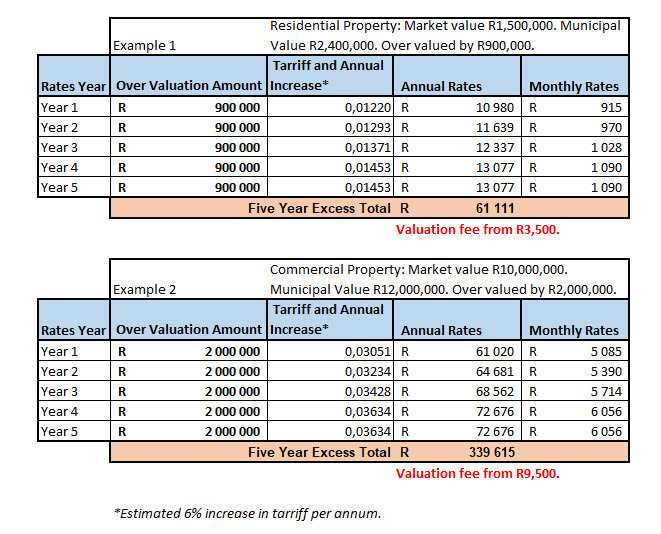
Rates Difference Calculator
We’ve created a simple calculator that can help you determine the difference in your rates and taxes should your property be overvalued.